For many American homeowners, a backyard swimming pool is the ultimate summer sanctuary. However, when summer temperatures soar into the 90°F or even 100°F+ range, a combination of heavy rainstorms and intense heat can trigger a frustrating issue: pool water suddenly turns acidic, causing the pH level to plummet. Acidic water not only irritates swimmers’ eyes and skin but also corrodes expensive metal pool equipment, pump components, and plaster surfaces.
Fortunately, you do not need to purchase overpriced chemical adjusters. Everyday baking soda (Sodium Bicarbonate) from your pantry is an excellent, cost-effective, and safe solution to raise your pool’s pH. This guide will explain how to precisely calculate the dosage, safely apply baking soda during hot and rainy summers, and leverage modern smart equipment to keep your water crystal clear.
Why Summer Heat and Heavy Rain Lower Pool pH
During the peak of the American summer, unexpected rainstorms and sustained heat act as the primary culprits behind unbalanced pool pH:
- The Impact of Acid Rain: Air pollutants like carbon dioxide and sulfur dioxide make natural rainwater inherently acidic, typically holding a pH between 5.0 and 5.5. When a heavy downpour dumps thousands of gallons of acidic rain into your pool, it rapidly dilutes and lowers both the pH and Total Alkalinity (TA).
- Organic Matter & Chemical Depletion: High water temperatures (above 85°F) accelerate the growth of bacteria and algae. Swimmer sweat, sunscreen, and debris blown in by storms such as leaves and soil spike the organic load. As your pool pump works overtime, chlorine is consumed rapidly. Popular sanitizers like Trichlor tabs are highly acidic; relying on them heavily during summer heatwaves continuously drags the pH down.
The ideal pH level for pool water should be strictly maintained between 7.2 and 7.6. If it drops below 7.2, it is time to intervene with baking soda.
The Baking Soda Dosage Formula
Baking soda raises your pH by targeting Total Alkalinity (TA) first. Total Alkalinity acts as a buffer for your pH; when TA is kept within the ideal range of 80 to 120 ppm, your pH remains stable and resists drastic fluctuations.
Core Dosage Baseline: To raise Total Alkalinity by 10 ppm (which correspondingly bumps up the pH) in a 10,000 Gallon pool, you will need to add 1.5 Pounds (24 Ounces) of baking soda.
To help you accurately dose your private pool, use this reference table based on pool volume (in Gallons) and baking soda weight (in Pounds and Ounces):
| Pool Volume (Gallons) | To Raise TA by 10 ppm | To Raise TA by 20 ppm | To Raise TA by 30 ppm |
| 5,000 Gal | 0.75 lbs (12 oz) | 1.5 lbs (24 oz) | 2.25 lbs (36 oz) |
| 10,000 Gal | 1.5 lbs (24 oz) | 3.0 lbs (48 oz) | 4.5 lbs (72 oz) |
| 15,000 Gal | 2.25 lbs (36 oz) | 4.5 lbs (72 oz) | 6.75 lbs (108 oz) |
| 20,000 Gal | 3.0 lbs (48 oz) | 6.0 lbs (96 oz) | 9.0 lbs (144 oz) |
Universal Calculation Formula:
$$\text{Required Baking Soda (lbs)} = \left(\frac{\text{Pool Volume in Gallons}}{10,000}\right) \times \left(\frac{\text{Desired TA Increase in ppm}}{10}\right) \times 1.5$$
4 Steps to Safely Add Baking Soda to Your Pool
Accurate dosing must be paired with the correct application process to ensure the baking soda dissolves fully without clouding your water:
- Test the Water Accurately: Use a reliable test strip or a liquid test kit to measure your current pH and Total Alkalinity (TA). Record these numbers to calculate your target ppm increase.
- Weigh and Divide the Dose: Even if your calculation calls for a large amount, never dump it all in at once. It is best to limit a single application to 2 to 3 lbs. Use a kitchen scale to measure out your dose precisely in Ounces (oz) or Pounds (lbs).
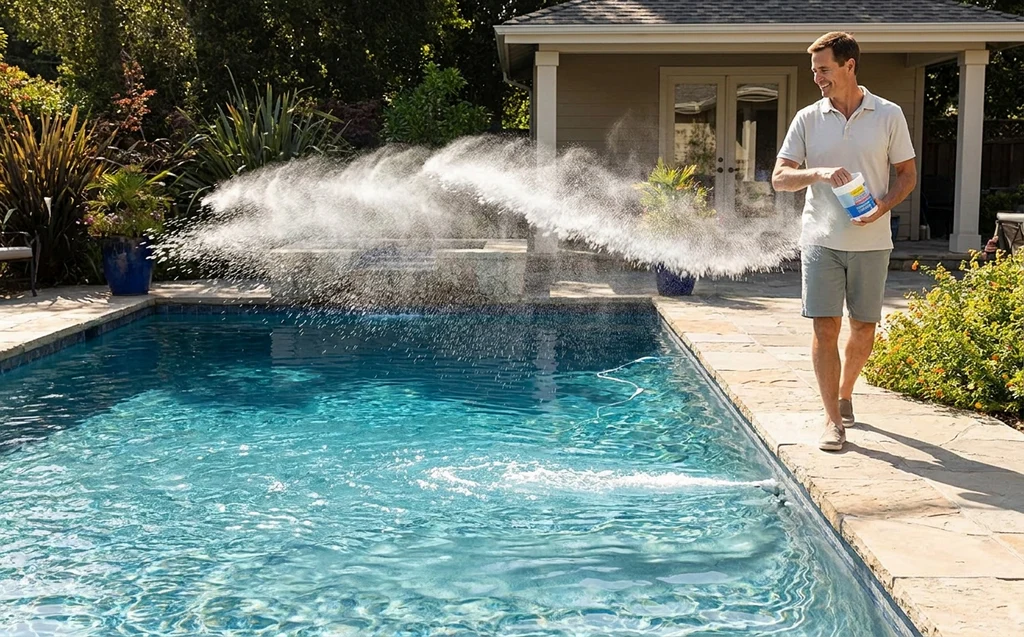
- Broadcast Evenly: Ensure your pool pump is running on high to maximize circulation. Walk around the perimeter of the pool, slowly sprinkling the baking soda into the deep end. Avoid doing this on a windy day to prevent the fine powder from blowing away.
- Circulate and Retest: Let the pool filtration system run continuously for at least 6 to 8 hours to mix the chemicals thoroughly. During hot summer months, wait 24 hours before running a second water test to see if further micro-adjustments are needed.
Summer Pool Maintenance: Best Practices
- Add in Stages, Avoid Overdosing: Adding too much baking soda can push your Total Alkalinity past 150 ppm. This triggers widespread water cloudiness and causes stubborn calcium scaling along the water line. It is always better to underdose and add more later than to overshoot.
- Clean and Test Immediately After Rain: Right after a severe storm, do not just test the pH. You must immediately remove leaves, dirt, and organic matter brought in by the wind. If left unattended, these contaminants will rot rapidly in the hot sun, consuming your chlorine and driving the pH down further.
The Ultimate Smart Maintenance Companion: MOVA A10 Robotic Pool Cleaner
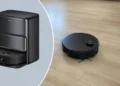
During a volatile, rainy summer, keeping up with pool debris can feel like a full-time job. Instead of wasting your hot summer afternoons manually skimming leaves and scrubbing algae off the walls, bringing in an intelligent automation partner changes everything. The MOVA A10 Robotic Pool Cleaner is engineered specifically to handle the heavy demands of American backyard pools.
When a summer storm dumps leaves and washes dirt onto the pool floor, the MOVA A10 deploys powerful suction and smart path planning to autonomously scrub the floor, walls, and water line. Its high-efficiency filtration system captures fine particles down to a few microns, stopping organic matter from decomposing and eating away at your active chlorine. While you manage the chemical balance with baking soda, the MOVA A10 handles the physical debris. This synergy dramatically lowers the risk of algae blooms and guarantees your pool remains a crystal-clear, inviting oasis all summer long.
Conclusion
Navigating the double-whammy of scorching heat and acidic rainstorms doesn’t have to break the bank. Baking soda is a safe, budget-friendly staple that gives you complete control over your pool’s pH and alkalinity. By sticking to strict US measurements (Gallons, Pounds, Ounces), calculating carefully, and adding the powder in gradual stages, you can easily restore balance to your water. Pair this chemical care with the automated cleaning power of the MOVA A10, and you can eliminate summer pool maintenance anxiety forever leaving you with nothing to do but dive in and enjoy the water.
Must Read: How To Protect Your Rights In A New Hampshire Family Law Case