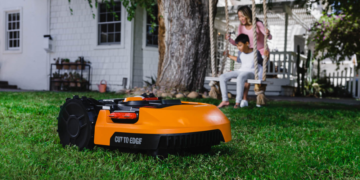
Maintaining a medium sized lawn, typically defined as an area up to 0.5 acre (roughly 2,000 square meters), presents a unique set of landscape management challenges. Smaller properties often require straightforward push mowers, while expansive estates demand heavy machinery. Medium yards, however, exist in a tricky sweet spot. They are often large enough that weekly manual mowing becomes a tedious multi-hour chore, yet complex enough to feature diverse terrain: mixed inclines, separate front and back gardens, mature shade trees, boundary fences, and outdoor furniture.
Robotic lawn care has evolved rapidly from simple boundary wire units into fully autonomous navigation systems. Choosing the right autonomous mower for a 0.5 acre property requires evaluating critical features like mapping precision, incline capacity, cutting efficiency, and obstruction handling. Here is what you need to consider to select the ideal machine for your property.
1. Navigation Beyond Boundary Wires and Base Stations
First generation robotic mowers relied on physical boundary wires buried along property edges. Installing these cables around a 0.5 acre perimeter is labor intensive, and a single broken wire halts operations completely. Satellite based RTK (Real Time Kinematic) systems solved the wire problem, but introduced a new weakness: signal obstruction. Trees, tall fencing, and adjacent multi-story structures frequently block satellite signals, causing mowers to freeze or skip sections.
For medium yards with mature landscaping, wire free 3D LiDAR navigation offers superior reliability. Unlike RTK systems, onboard 3D LiDAR creates real time spatial maps using light pulses rather than orbital satellites. This enables continuous operation under dense foliage, heavy canopy cover, or close to house walls without signal dropouts. When evaluating equipment, choosing models with RTK free 3D LiDAR ensures fast setup and uninterrupted daily performance.
2. Managing Multi-Zone Properties and Divided Layouts
Properties near the half acre mark rarely consist of a single unbroken square of grass. Typically, home setups feature separate front and back yards connected by narrow side passages, gated walkways, or driveway crossings.
When selecting a mower, confirm its mapping capabilities support multi-zone navigation and dual-map management. Advanced mowers allow property owners to create independent maps for distinct lawn zones through a mobile application. You can set customized mowing heights, working frequencies, and specific schedules for each section. For instance, high visibility front lawns can be trimmed every two days at a specific height, while back yards with children’s play areas can run on weekend schedules with dedicated no-go boundaries defined around flower beds.
3. Slopes, Incline Ratings, and All-Wheel-Drive Traction
Terrain profile is often the single biggest deciding factor when buying a robot mower. A smooth, flat lawn has vastly different power requirements compared to a yard featuring rolling hills, drainage swales, or steep embankments.
Standard rear wheel drive mowers generally handle inclines up to 45% (approximately 24 degrees). This capacity is sufficient for typical residential slopes and gentle lawn contours. A reliable model in this category, such as the MOVA LiDAX Ultra 2000, navigates standard slopes cleanly while utilizing organized U-shaped paths and off-road rear tires to maintain traction through narrow pathways as slim as 23.6 inches.
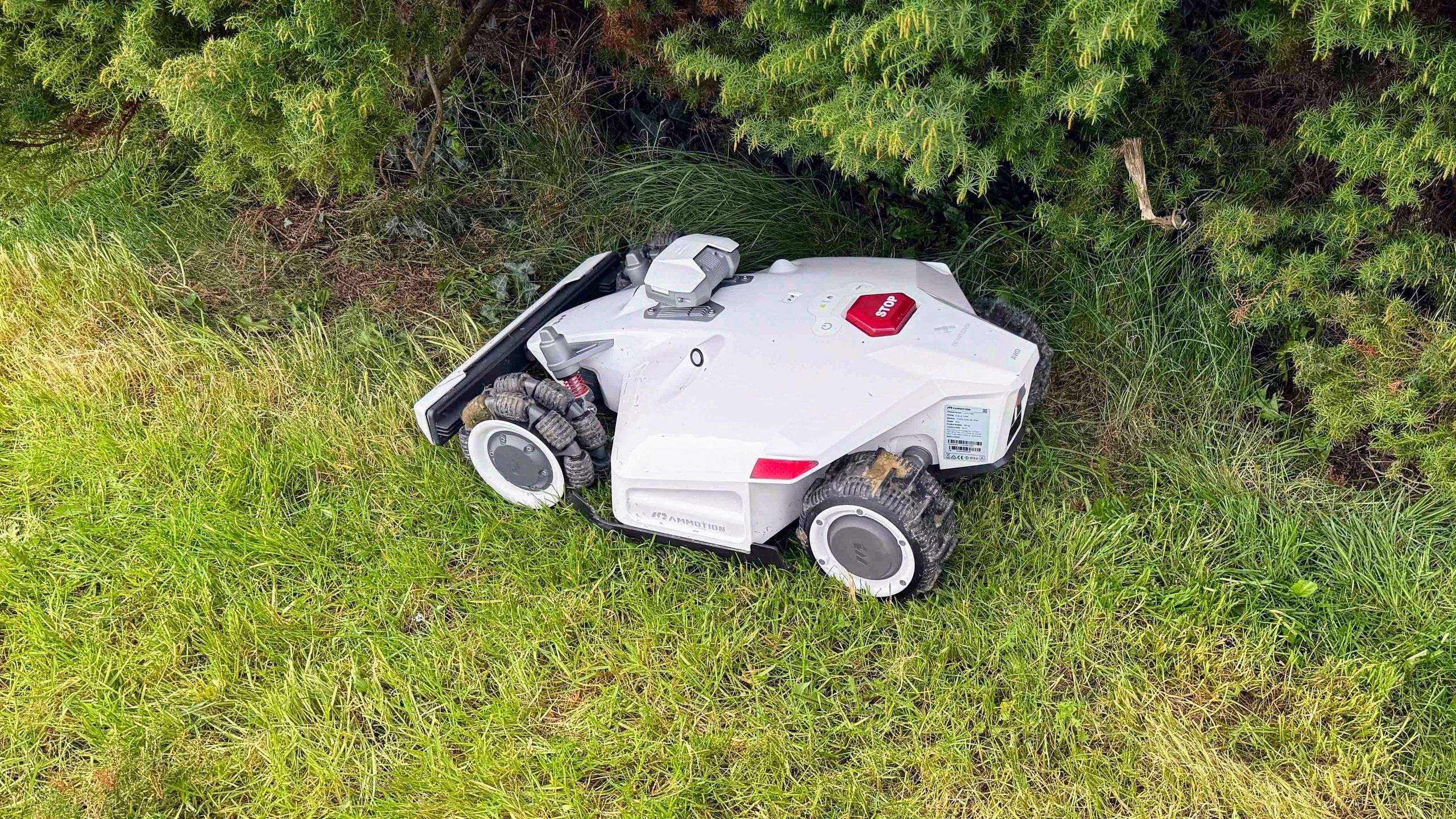
However, if your 0.5 acre lot features extreme gradients, uneven humps, or damp sloped turf, standard drive wheels may slip or tear the grass. In these challenging conditions, an all wheel drive system is essential. The upgraded flagship MOVA LiDAX Ultra 2000 AWD incorporates UltraDrive AWD technology alongside a high output 36V battery. This configuration tackles steep slopes up to 80% without losing traction or drifting downhill, ensuring consistent cutting across demanding landscapes.
4. Obstacle Recognition and Yard Safety
Medium sized lawns are active living spaces. Garden furniture, garden hoses, children’s toys, fallen branches, and outdoor pet equipment are constantly moving around the yard. Older bump sensor mowers rely on physical impact to change direction, which can damage delicate yard items or cause the mower to get stuck frequently.
Modern autonomous mowers utilize AI vision systems trained to recognize hundreds of common outdoor items. Optical setups like next-generation UltraView 3.0 vision allow mowers to identify over 300 distinct objects in real time. The mower dynamically adjusts its path around temporary obstacles without stopping its cycle or requiring manual intervention.
5. Cutting Width, Battery Power, and Edging Precision
Efficiency dictates how long a mower must run to maintain a half acre yard. A small cutting deck requires long operational hours to cover 0.5 acre, leading to higher mechanical wear. For medium yards, dual disc cutting systems significantly reduce overall operating time.
Standard compact models built as Lawn Mowers for Small Lawns work wonderfully for compact gardens under 0.15 acres, but medium yards demand wider cutting decks. Flagship units with a 15.8 inch dual disc system and high power batteries complete mowing passes in nearly half the time required by single-disc alternatives.
Additionally, pay attention to perimeter trimming capabilities. Look for specialized edge cutting features like UltraTrim 2.0, which allow blades to reach within minimal distance of fences, retaining walls, and garden borders, eliminating the need for frequent manual string trimming after every cycle.
Summary Checklist for Your Selection
When selecting the right autonomous mower for your medium yard, align your choice directly with your property conditions:
- Standard Medium Lawns (Up to 0.5 Acre, Moderate Slopes): Choose a balanced rear wheel drive unit like the MOVA LiDAX Ultra 2000. It delivers precise 3D LiDAR mapping, multi-zone scheduling, and effective 45% slope capability at exceptional value.
- Complex, Steep, or Rough Terrain: Upgrade to an all wheel drive model like the MOVA LiDAX Ultra 2000 AWD. Its 80% climbing capacity, 15.8 inch dual disc cutting deck, and UltraView 3.0 AI obstacle avoidance make it ideal for challenging landscapes.
By assessing your yard’s slope profile, tree cover, and structural layout, you can choose a robotic lawn mower that provides years of quiet, hands free lawn maintenance.
Must Read: How to Raise Pool pH with Baking Soda: Dosage, Steps, and Best Practices